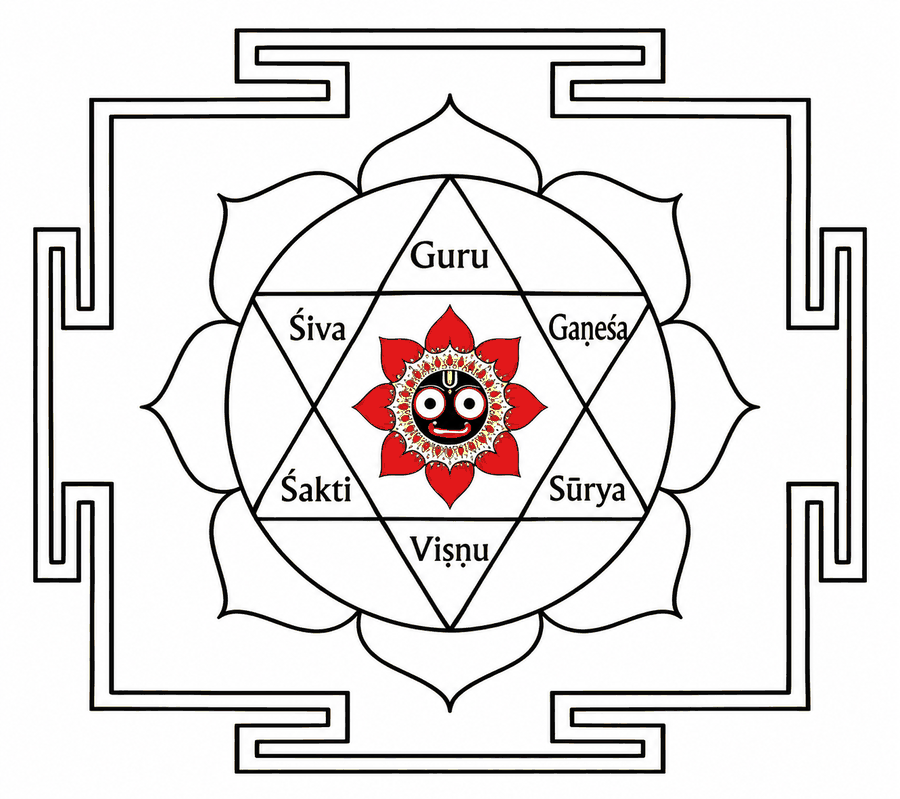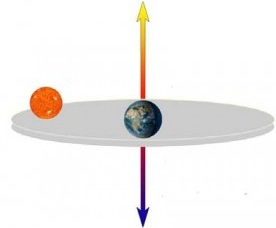
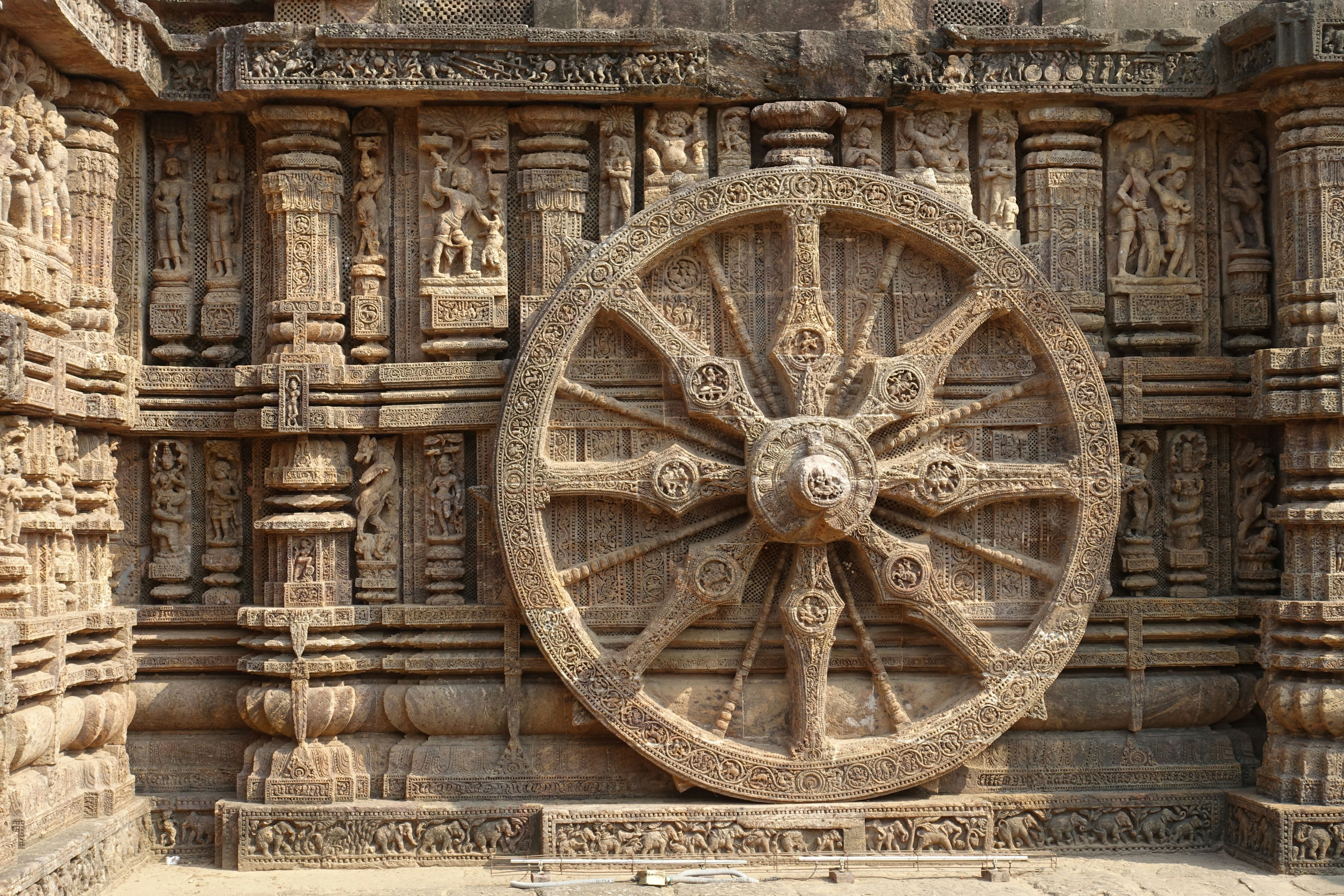
Kāla Chakra, or the Wheel of Time, shows functioning on the horizontal plane and explains the soul’s attachment to material creation.
This principle of Kala Chakra is closely linked to the Aṣṭadala Padma and the eight-planet scheme of Carakāraka, which is used for Jīvātma. Kāla Chakra always indicates limitations and blockages that the Ātma experiences on its path of birth and death.
By principle, Kāla Chakra contains nothing positive and always relates to the negative Karakatva of Grahas. In Jyotiṣa, it is used to recognize weaknesses and perform remedial measures. Kāla Chakra is also represented as a snake eating its own tail.
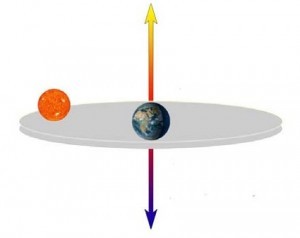
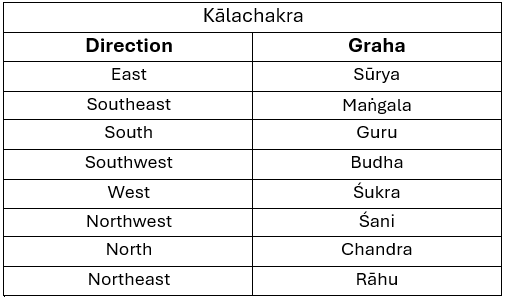
Kāla Chakra consists of eight directions, divided into two types:
- Primary directions (Kendras) – East, West, North, and South.
- Secondary directions (Koṇas) – Southeast, Southwest, Northwest, and Northeast.
The four Kendras are points where energy enters, ruled by Sūrya, Chandra, Śukra, and Guru. These are places where we are capable of learning because here are the lights and the two Gurus, who help us rise from the horizontal plane and proceed on the path of Ketu (Ananta) and Mokṣa.
The four Koṇas are points where energy departs, representing ignorance and destruction, and are ruled by the malefics Rāhu, Śani, Budha, and Maṅgala. Due to their malefic rulership over energy departure points, we are unaware of this energy leaving. When Grahas are positioned on these directions, they indicate areas of blockage.
There are two more directions: vertically upwards and vertically downwards. Both represent exciting the karmic cycle.
The deity of the downward vertical direction is Brahma, representing rebirth or fall into Tala (the material plane).
The deity of the upward vertical direction is Ananta, representing final liberation or Mokṣa.
The story originates from the Liṅga Purāṇa, where at one moment Viṣṇu and Brahma argued over who was superior. Suddenly, a huge pillar appeared, astonishing them, and they tried to find its beginning and end.
Brahma transformed into a boar and went downward to investigate, while Viṣṇu transformed into a swan and went upward. That pillar was in fact a Liṅga, which is infinite.
Dig and Kālachakra
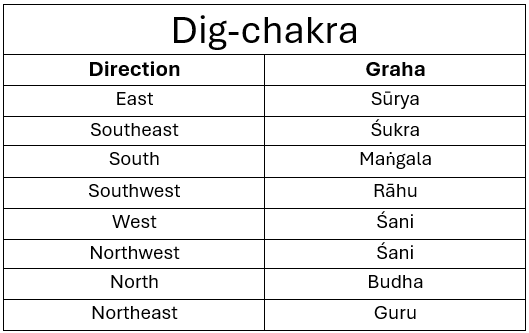
In these same directions, Grahas also receive their directional strength, or Dig Bala. Each Graha attains its full potential of directional strength in one of the eight directions.
In these directions, Grahas receive energy from Maha Viṣṇu to successfully perform their Karma Yoga.
So, the most important difference between these two Chakras is that a Graha in Dig Chakra shows its full potential, while in Kāla Chakra, it shows its limitations.
A very important principle is hidden here: when a Graha causes problems in Kāla Chakra, the Graha that rules that direction in Dig Chakra will provide the solution.
For example, consider the Northwest direction, ruled by the deity Iśāna. In Kāla Chakra, the ruler of this direction is Rāhu, who always opposes Guru and tries to negate its effects. Rāhu is the cause of rebirth and the one who causes the eclipse of Sūrya (Sun).
In Dig Chakra, the ruler of this direction is Guru, who has the potential to resolve all problems caused by Rāhu. Therefore, through pious action, regular meditation, and chanting mantras, a person can overcome the problems and doubts created by Rāhu.
Similarly, Maṅgala, who rules the Agni Koṇa (fire direction), gives a person warrior-like traits, desire for combat, competition, and quarrels. In Dig Chakra, the ruler of this direction is Śukra (Venus), exalted in Pisces, in Rishi Rashi, which brings harmony, love, and balance. Only Śukra can control the impulsive and temperamental Maṅgala.
This principle can be applied to every direction.
Digpāla
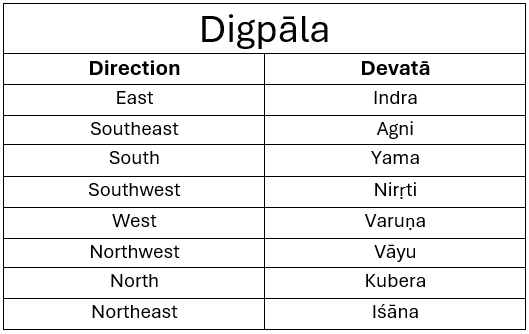
The deities of the directions, or Digpāla, are given in the following table:
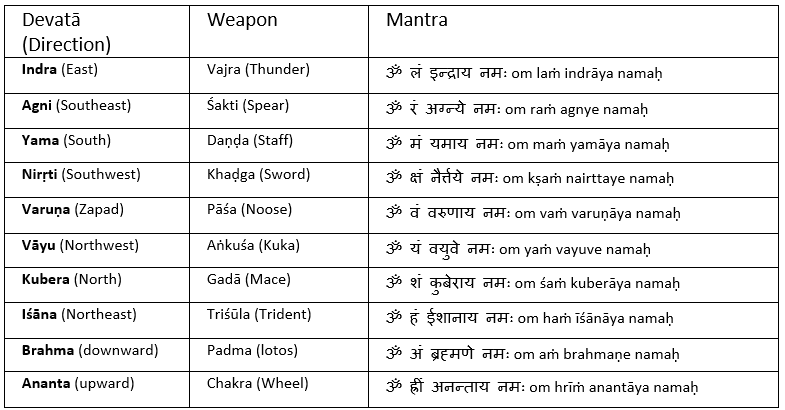
The deities of the directions, or Digpāla, are also the deities of the Dasāṁśa (D-10) divisional chart, which concerns the karma a person must perform in life. They always show the motivation and desires of the given Graha.
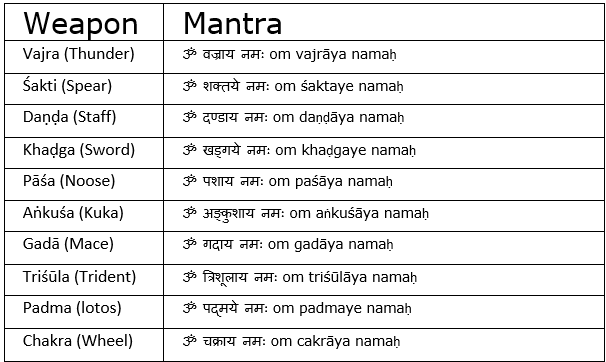
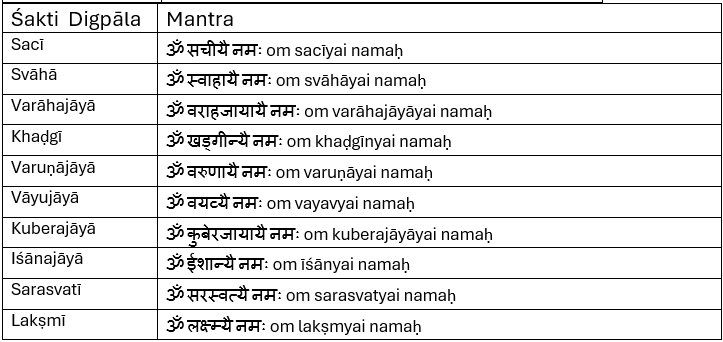
Each of the Dasa Digpāla has its own consort and weapon. The consort of the Digpāla shows the fruits of the deity’s actions, while the weapon indicates the abilities and skills possessed by that deity.
By worshiping the ten Digpāla or selecting a particular deity, we enable the direction and qualities represented by that deity to manifest. Worshiping the Deity gives strength and ability to endure and achieve the goal, while worshiping the ten consorts of the Digpāla ensures that what we achieve aligns with our preferences and taste.
In Praśna Marga, a method is provided for drawing the Kālachakra:
Position of stars in Kālachakra
चतुरश्रत्रिकंकुर्यादन्तर्मध्येवहिःक्रमात्।
दण्डांश्वचतुरस्तद्दिककेणगांश्वक्रसिद्धये॥८२॥
दण्डानांप्रत्येकंचतुरश्रसमागमेषुमध्येच।
आभिजिद्युक्त्तस्ताराःस्थाप्याःस्युःसप्तसप्तगणनाथ्॥८३॥
दण्डाग्रादामध्मंनिर्गत्यततोन्तिकस्थदण्डेन।
एवंपुनःप्रवेशोनिर्गमनंप्रोक्त्तवच्चगणनमिह॥८४॥caturaśratrikaṁ kuryādantarmadhye vahiḥ kramāt|
daṇḍāṁśva caturastaddikakeṇagāṁśvakrasiddhaye || 82 ||
daṇḍānāṁ pratyekaṁ caturaśrasamāgameṣu madhye ca|
ābhijidyukttastārāḥ sthāpyāḥ syuḥ sapta sapta gaṇanāth||83||
daṇḍāgrādāmadhmaṁ nirgatyatatontikasthadaṇḍena|
evaṁ punaḥ praveśo nirgamanaṁ prokttavacca gaṇanamiha|| 84 ||
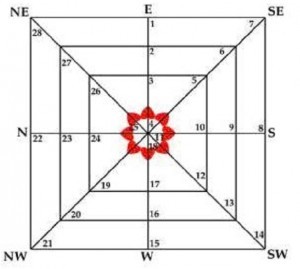
Draw three squares, one inside the other, and prepare the Chakra as shown in the diagram.
Starting from the center of the top horizontal line, place the 28 Nakṣatras (including Abhijit) in the order shown in the diagram. Begin counting from number one and follow the sequence given in the Chakra.
It is customary to place the Nakṣatra in which Sūrya (Sun) is located in the Indra Kendra (Eastern direction), and then proceed to fill in all the Nakṣatras and Grahas in order.
Alongside the Grahas and Nakṣatras arranged in the Kālachakra, the Tithis are also placed. Tithis are located according to their ruling Graha, as follows:
- Sūrya (Sun) – East – Pratipāda and Navami
- Maṅgala (Mars) – Southeast – Tṛtīya and Ekadaśī
- Guru (Jupiter) – South – Pañcamī and Trayodaśī
- Budha (Mercury) – Southwest – Chaturthi and Dvādaśī
- Śukra (Venus) – West – Śaṣṭhī and Chaturdaśī
- Śani (Saturn) – Northwest – Saptami and Pūrṇimā
- Chandra (Moon) – North – Dvitīya and Daśamī
- Rāhu – Northeast – Aṣṭamī and Amāvāsya
Sources:
- Agni Purāṇa
- Śiva Tāṇḍava Stotra – Translation and explanations by Pt. Sanjay Rath
- Vedic Remedies in Astrology by Pt. Sanjay Rath
- Dasa Mahāvidyā – Article by Pt. Sanjay Rath
- Praśna Marga – BV Raman
- SJC Lessons
ॐ कृष्ण गुरु
om kṛṣṇa guru