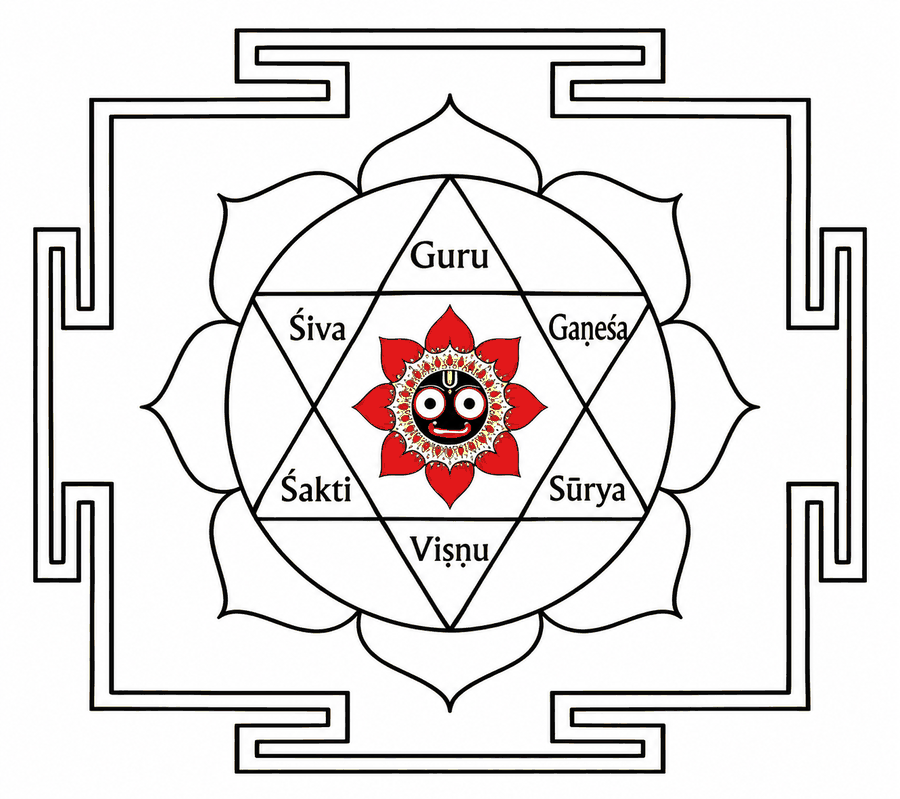
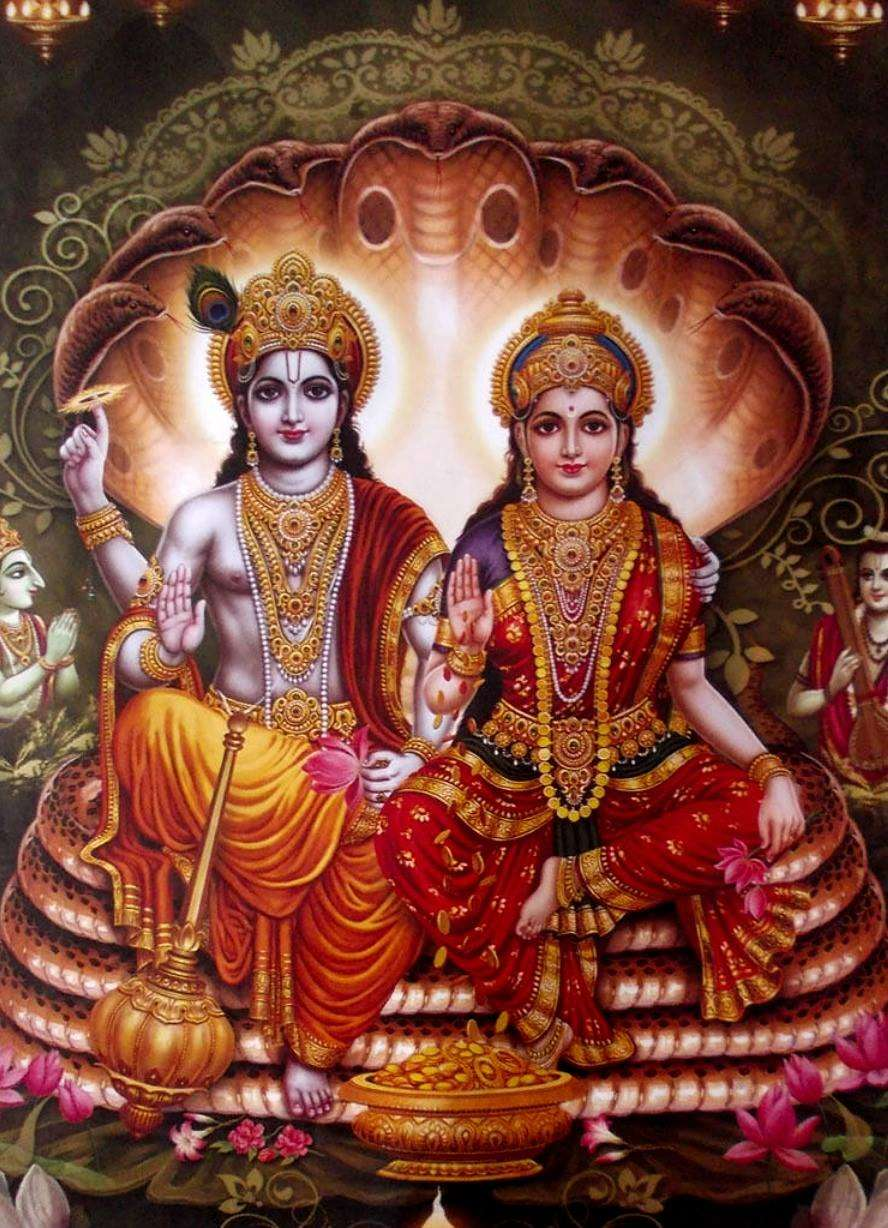
Partnerships are definitely one of the most controversial topics in modern astrology. The two Gurus, Bṛhaspati and Śukrācārya, take their positions in the Nasagika Daśā from the twelfth to the fiftieth year, and both represent partners in the male and female horoscope and are central events in life.
1. उपपदं पदं पित्रनुचरात्
1| upapadaṁ padaṁ pitranucarāt ||The Ārūḍha of the twelfth house (counted by Zodiac) is called the Upapada Lagna.
Mahaṛṣi Jaimini, Upadeśa Sutra – Śloka 1.4.1
Calculation of the Ārūḍha from any house is done in this way: count from the given house to its ruler, then the same number of houses from the ruler. There are two exceptions in calculating the Ārūḍha:
- When the ruler of a house is in the first or seventh house from it, the Ārūḍha of that house will be in the tenth from it.
- When the ruler of a house is four or ten places away from itself, the Ārūḍha of that house will be in the fourth house.
In cases of dual rulership, the stronger ruler is taken.
Now we will do an example of calculating the Upapada Lagna.
Chart 1
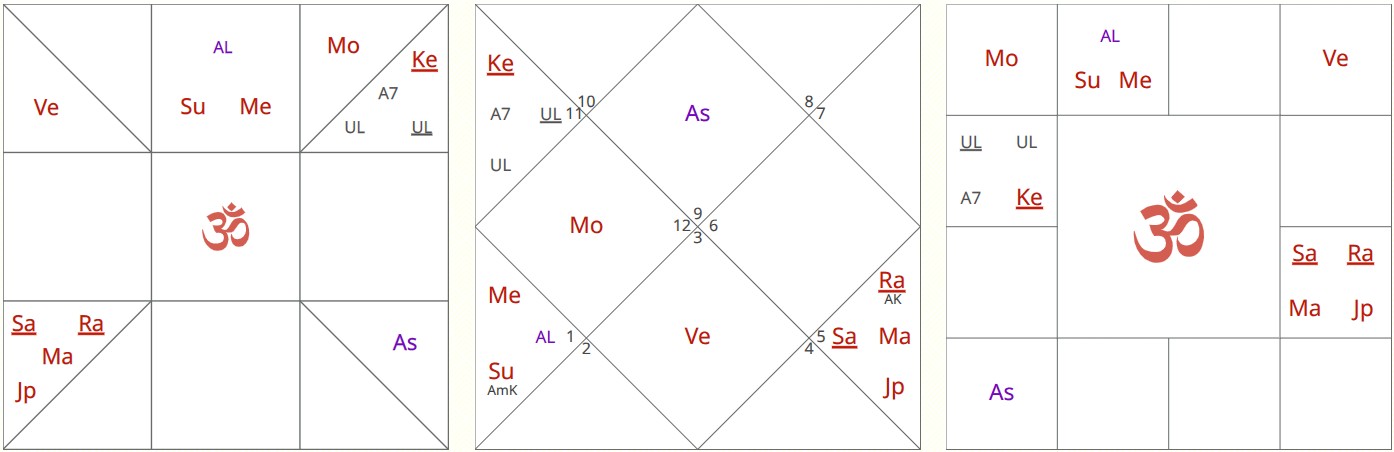
In this case, we have two rulers of the twelfth house, Mars (Mangal) and Ketu. Mars, being in conjunction with three Grahas, is stronger than Ketu, who is alone in the third house. Mars has moved ten places from the twelfth house, and according to the rule, when a Graha moves ten places, the Arudha of that house will be in the fourth house from it. Counting four houses from the twelfth house, we reach the third house, Aquarius (Kumbha). Therefore, in this case, the Upapada Lagna is in the third house, in Aquarius.
Upapada is also called Gauṇa Pada and Vyaya Pada. Vyaya Pada relates to what we lose, expenses, and what goes away. The Ārūḍha of the twelfth house contains the complete concept of giving, as it shows Vyaya, that which must go. When we willingly let go of this, Vyaya Pada becomes Gauṇa Pada, that which possesses quality. Therefore, fasting on the day of the ruler of the Upapada Lagna is very important, as it will represent the first conscious act of giving.
Since Ārūḍha s concern manifestation in this world, the Upapada Lagna is observed for partners, as Mahaṛṣi Parāśara stated in his Horā Śāstra, dedicating an entire chapter (30) to the discussion of Upapada. In the first Śloka, he says:
अथोपपदमाश्रित्य कथयामि फलं द्विज।
युच्छुभत्वे भवेन्नृणां पुत्रदारादिजं सुखम्॥ १॥
athopapadamāśritya kathayāmi phalaṁ dvija |
yucchubhatve bhavennṛṇāṁ putradārādijaṁ sukham || 1||
“O Brahmin, now I will speak to you about Upapada, the auspiciousness that confirms a person’s happiness regarding children, spouse, etc.”
From the Upapada, we see what we are obliged to give to this world. Thus, following Mahaṛṣi Parāśara, we conclude that the principle of partnerships in the context of Upapada is fundamentally about giving.
There are two concepts related to partnerships. One observes partnerships in relation to the Dārapada and the other in relation to the Upapada Lagna. Dārapada shows physical relationships, while Upapada indicates connection in the sense of creation and also shows those who accompany us in life.
The position of Upapada shows our willingness to give. Grahas located on the Upapada, those that aspect it, and the ruling Graha will influence attitudes regarding giving. These Grahas also describe the partner.
All matters related to the partner are viewed from the Upapada Lagna: the partner’s mother from the fourth of Upapada, father from the ninth, brothers and sisters from the third and eleventh of Upapada.
The relationship between the Ārūḍha Lagna (self) and Upapada (partner) is crucial for the possibility of marriage. If the Upapada is in a Duṣthāna from Ārūḍha Lagna, it is a very bad combination. Upapada Lagna in the twelfth house from Ārūḍha Lagna may indicate disinterest in the partner or a mismatch of life paths. If Upapada is in the sixth house from Ārūḍha Lagna, it is considered one of the worst positions because it is the Māraṇa Kāraka Sthāna for Venus (Śukra), which is the Naisargika Kalatra Kāraka.
Complete creation is based on the triple principle of creation, maintenance, and destruction: the Pranava syllable AUM, where Brahma – A (Creation), Viṣṇu – U (Maintenance), and Śiva – M (Destruction). In this discussion, we focus on maintaining partnerships.
In Jyotiṣa, it is important to understand the principle of the second house as the house of maintenance. The second house plays a very significant role, as by its nature it is also a Māraka Bhāva (house of death). The Kāraka for the second house is Guru, and the Devata is Viṣṇu. Thus, the second house from any given house is a house of maintenance. Following this analogy, we conclude that the second house from Upapada is responsible for sustaining the marriage. This is a very important principle of crucial significance. Any prediction related to the longevity of partnerships and marriage must be tied to the second house.
Dharma and Upapada Lagna
Dharma is the most important duty a person must fulfil in life. Śrī Kṛṣṇa says that it is better for a person to spend 10 minutes in their own Dharma than several lifetimes in someone else’s.
Navāṁśa is the divisional chart of nine and relates to Dharma. There are two ways a person can fulfill their Dharma in the best possible way (if not the only way):
- By dedicating oneself to God, renouncing everything, and living a life of asceticism.
- By serving one’s Kula (family/tradition) in which they were born.
These are the two ideal ways to follow Dharma—one satisfies the Devas, the other the Pitṛs.
The Kāraka for Dharma is Sūrya (Sun). Therefore, Mahaṛṣi Parāśara and Mahaṛṣi Jaimini agree that Sūrya is not malefic concerning matters related to Upapada, except if debilitated.
BPHS 30:06
रविर्नैवात्र पापः स्यात् स्वोच्चमित्रस्वभस्थितः।
नीचशत्रुगृहस्थश्चेत्तदाऽसौ पाप एव हि॥ ६॥
ravirnaivātra pāpaḥ syāt svoccamitrasvabhasthitaḥ |
nīcaśatrugṛhasthaścettadā’sau pāpa eva hi || 6||
In this case, Sūrya, if exalted or in a friendly sign, is not malefic. He is malefic if debilitated or in an enemy sign.
MJUS 1.4.3
३। नात्र रविः पापः॥
3| nātra raviḥ pāpaḥ||
Sūrya is not malefic for matters related to Upapada.
All matters related to sustaining relationships are examined from the second house. In his Upadeśa Sutras, Mahaṛṣi Jaimini states:
Shloka 1.4.2
२। तत्रपापस्य पापयोगे प्रव्रज्या दारनाशो वा॥
2| tatrapāpasya pāpayoge pravrajyā dāranāśo vā||
If the second house from Upapada has a malefic aspect or conjunction, the person may lose their spouse or renounce worldly life.
Since marriage is closely linked to Dharma, all matters related to marriage and partnerships are examined from the Navāṁśa chart. Navāṁśa is the divisional chart of nine, and the Kārya Bhāva (house of action) is the ninth house—thus, Dharma.
Returning to the second house and maintaining marriage: Mahaṛṣi Parashara and Mahaṛṣi Jaimini unanimously state that if the second house from Upapada is afflicted by malefics and lacks benefic aspects, the person will remain without a partner. These conditions must also be confirmed in the Navāṁśa.
If the ruler of the second house from Upapada is unfavorably placed in Navāṁśa, it indicates that the relationship or marriage will not last long. Placement of this ruler in a trine or Kendra in Navāṁśa promises longevity. Placement in a Duṣthāna from Lagna indicates the impossibility of sustaining the given Upapada.
We will first examine a very well-known example:
Chart 2: Bhagavan Śrī Rāma
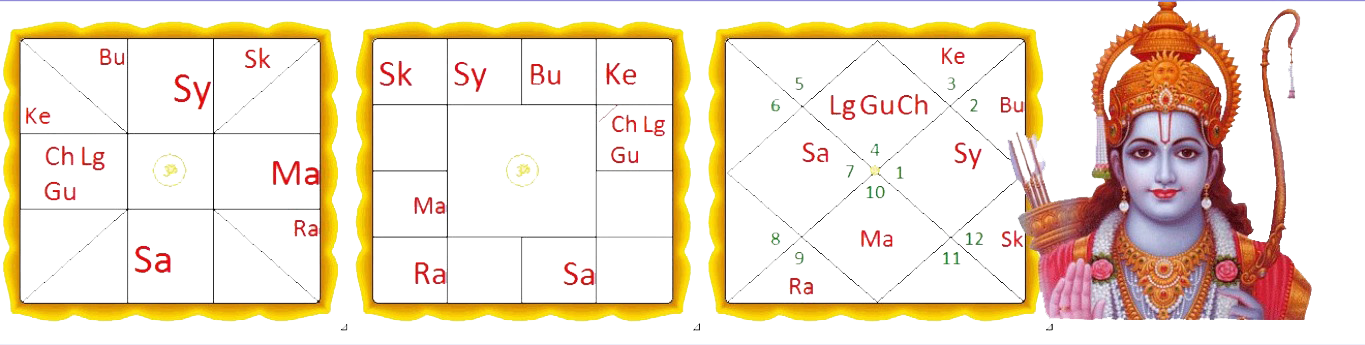
Bhagavan Śrī Rāma had the Upapada Lagna in the tenth house, which indicates good compatibility with a partner. Mahaṛṣi Jaimini says:
Text 1.4.9
९। उच्चे तस्मिकुमकुलाद् दारलाभः॥
9| ucce tasmikumakulād dāralābhaḥ||
If the ruler of Upapada is exalted, the partner comes from an elite family.
Sita was the daughter of Ṛṣi Janaka. In this case, all Grahas, the nodes, and the ruler of the second from Upapada aspect the second from Upapada. Therefore, the results are mixed. However, the outcome becomes negative due to the position of the ruler of the second from Upapada in the twelfth house from Ārūḍha Lagna. The twelfth house from Ārūḍha Lagna indicates what we naturally lose.
As we know, Rāma ultimately had to part with Sita, because she was in Ravana’s presence.
Chart 3
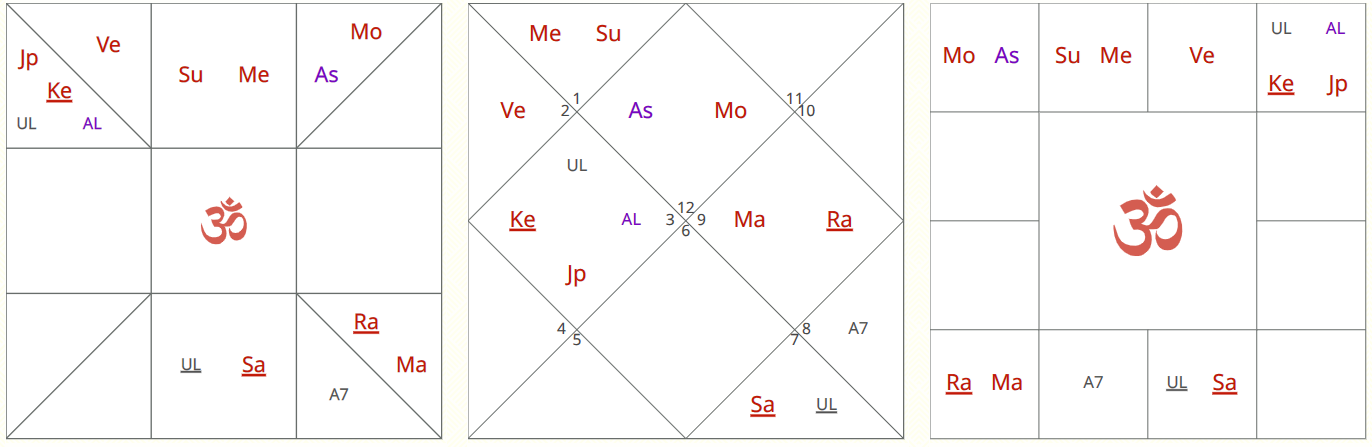
Here we have a person whose ruler of the seventh house is placed in the second house, which indicates that their attitude toward partnerships (seventh house ruler) is inseparable from their attitude toward family (second house).
The ruler of the twelfth house can be either Śani (Saturn) or Rāhu. If we take it as Śani, the Upapada Lagna is in the fourth house; if we take Rāhu, it would be in the eighth house. Here, Śani is exalted and retrograde, showing great strength, so we calculate Upapada from Śani.
Thus, Upapada is in the fourth house with Guru (Jupiter) and Ketu, indicating that the person will meet their partner very early, during childhood. The ruler of the second house from Upapada is Chandra (Moon), placed in Lagna, showing that the person will wish to maintain the marriage.
In this case, Chandra is also the Ātmakāraka, indicating that the person will remain devoted to sustaining this marriage, because the houses ruled by Ātmakāraka are highly important in life. The person met their partner in early youth, began a relationship at age seventeen, and after five years, they married. The marriage took place when the person was 23, which corresponds to the years of maturity of Chandra.
In Navāṁśa, Chandra is placed in the second house, together with Śani in high dignity, ensuring that the marriage’s longevity is not threatened.
The ninth house from Upapada Lagna is observed for children with the given partner. In this case, it is Aquarius (Kumbha). One ruler is Rāhu, together with Mangal (Mars), which is in the Māraṇa Kāraka Sthāna in the seventh house from Upapada Lagna, extremely unfavorable for Upapada Lagna. The person had two spontaneous miscarriages (Rāhu and Mangal), but later had three children with the same partner (Uccha Śani – exaltation indicates the number three).
Next, we will examine the partner’s chart.
Chart 4
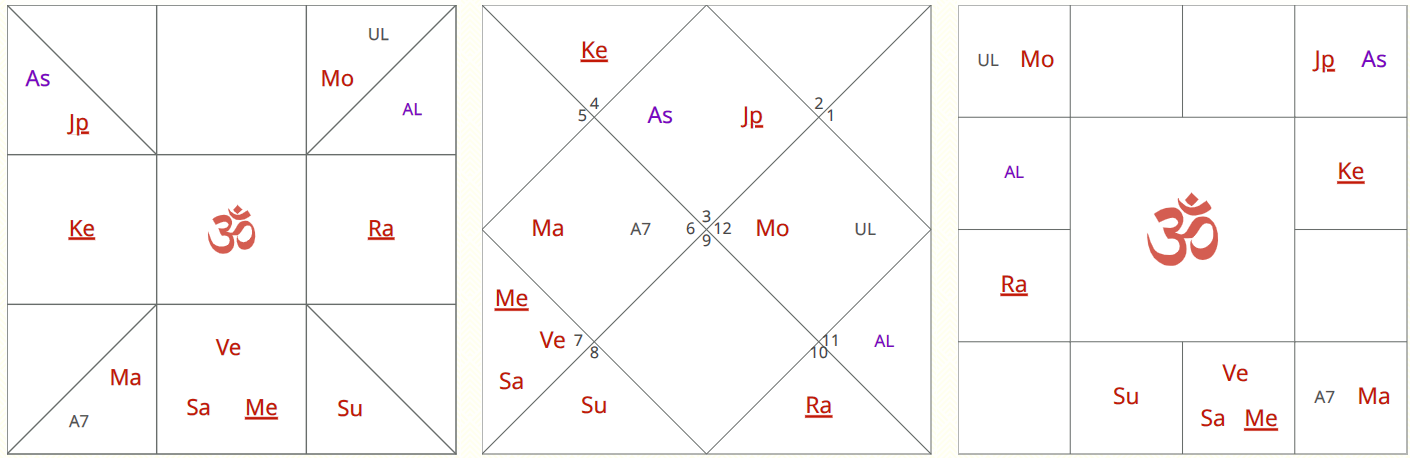
Here we see that Upapada Lagna is in the tenth house, where the ruler of the second house is placed, indicating that the meeting occurred through family. The parents knew each other and maintained relationships even before the marriage.
What is interesting in this case is that the person has Mithuna Lagna (Gemini Ascendant), with Mangal’s (Mars) Rāśi Dṛṣṭi on Lagna and the seventh house ruler, Guru (Jupiter). This shows that the person wanted to enter into a partnership as soon as possible (Mangal – impatience).
Since Chandra (Moon), the ruler of the second from Upapada Lagna, is in the tenth house, one of the conditions for marriage was employment, to acquire a certain security.
Chart 5: Death of the partner
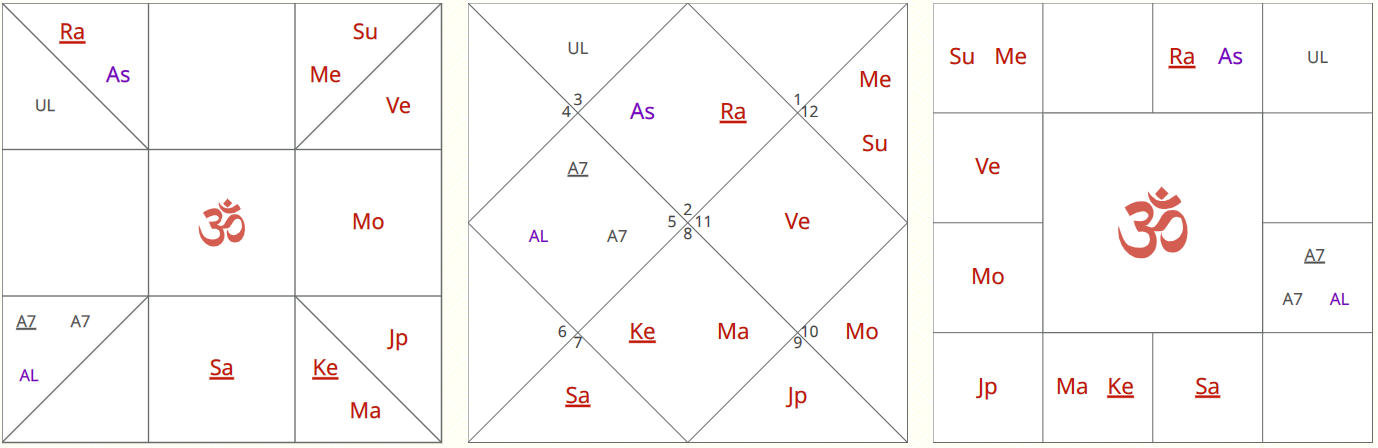
Many parameters must align for something as tragic as the death of a partner to occur. In this case, Upapada is in the second house, and its ruler, Budha (Mercury), is debilitated in the eleventh house. Budha is also the Ātmakāraka and Vargottama in Nicca (debilitated sign).
There is also a Kuja Doṣa, formed by Mangal (Mars, Dārākāraka in the chart), which is placed in the seventh house in Māraṇa Kāraka Sthāna, heavily afflicted by the nodes.
The second house from Upapada is Karka Rāśi (Cancer) and is aspected by Mangal, Śukra, Rāhu, Ketu (via Rāśi Dṛṣṭi), and Śani from the sixth house (Gaha Dṛṣṭi). The ruler of the second house, Chandra (Moon), is in Māraṇa Kāraka Sthāna relative to Upapada Lagna and aspected by Mangal, Rāhu, and Ketu, without any benefic aspects.
In Navāṁśa, Chandra is involved in a strong Rudra Yoga (mutual aspect with Mangal) along the Lagna–seventh house axis (person and partner). The seventh house in Navāṁśa represents the first partner.
There is also another very negative combination: Śani, ruler of the ninth house in the Rashi chart, is debilitated in Navāṁśa and in conjunction with Śukra.
All these factors indicate a tragic outcome for the partner. Indeed, the partner had a traffic accident on June 28, 2006, and did not survive.
Māraka houses are the most dangerous concerning sustaining marriage. The second and seventh houses play key roles:
- The second house shows the reasons why such events happen.
- The seventh house shows who opposes marriage.
If Chandra is in the seventh from Upapada, the partner’s mother may be opposed to the marriage; if Surya is there, it may be the father, etc.
Grahas in the second house indicate interference from other people:
- Chandra – people with children
- Śukra – people ready for marriage
- Guru – married individuals
- Budha – immature people
- Śani – older individuals, etc.
Duṣthānas in Navāṁśa
The sixth house in Navāṁśa is the place of natural debilitation for Shukra (Venus) and is also the Māraṇa Kāraka Sthāna for Śukra. It is the twelfth house from the seventh and indicates tendencies that can prevent marriage.
The eighth house in Navāṁśa is the Māraka for the seventh house, and Grahas placed in the eighth house show the reasons for a marriage breakup.
The twelfth house is also the sixth from the seventh and the Māraṇa Kāraka Sthāna for Śukra in relation to the seventh house. Therefore, any Graha placed in the twelfth house in Navāṁśa will create obstacles to entering marriage.
In Navāṁśa, one must observe the Grahas relevant to either initiating or sustaining marriage.
Chart 6: Divorce
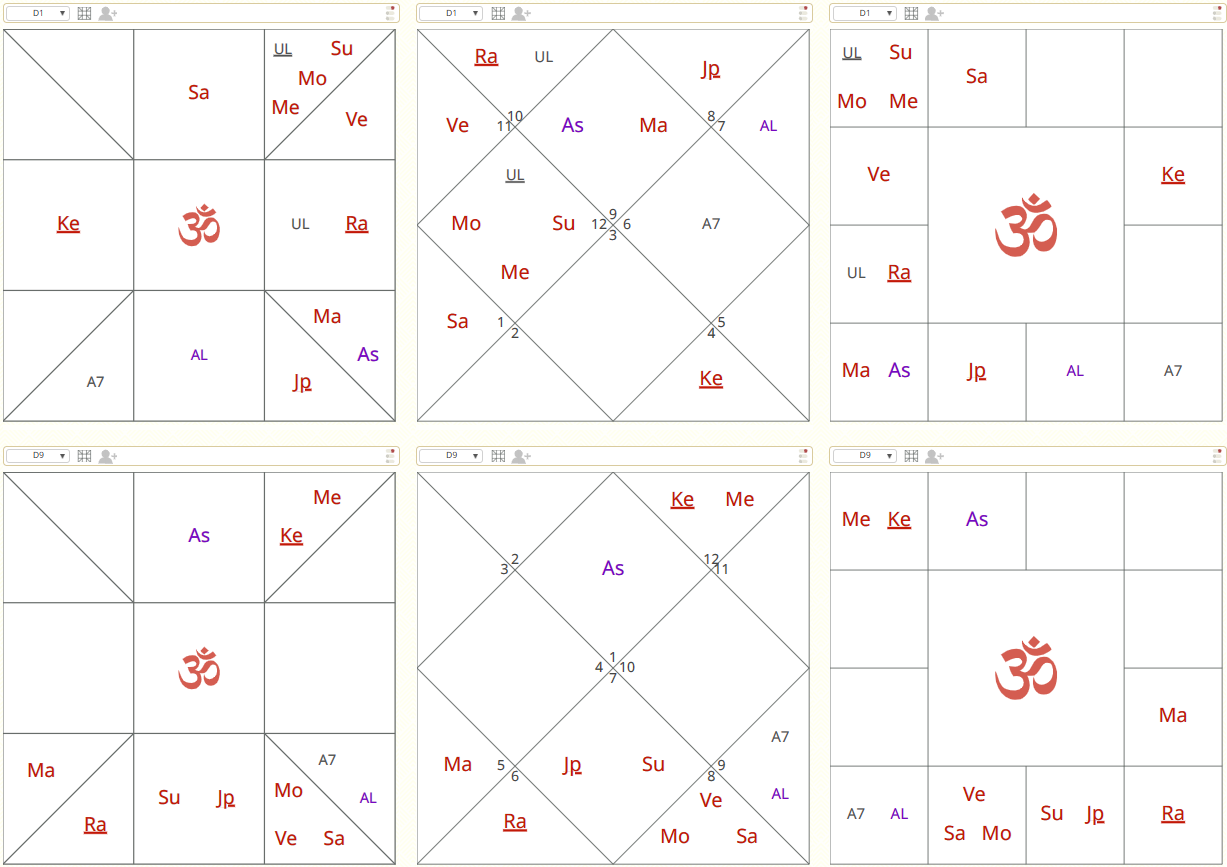
In Chart 6, we have an example of a person who spent eight years in marriage.
Upapada is in the second house, with Rāhu. The second house from Upapada contains Śukra (Venus), and the rulers are Rāhu and Śani (Saturn). Śani is debilitated, which is one indicator that the marriage may not endure.
In Navāṁśa, both rulers are in Duṣthānas: Rāhu in the sixth house and Śani in the eighth house. The Graha from the second house (Śukra) is also in the eighth house in Navāṁśa.
The eighth house is very important for sustaining marriage, as it is the Māraka for the seventh house.
Due to Śukra’s position in the Rāśi chart, there was interference from other people in the marital relationship, and Ketu in the seventh house indicates problems with certain family members.
Makara Upapada, by its nature, shows disagreement with the partner’s mother, because the seventh from Upapada is ruled by Chandra (Moon).
One of the rulers of the second from Upapada is located on Upapada itself, which indicates that the partner will want to remain in the marriage.
Chart 7
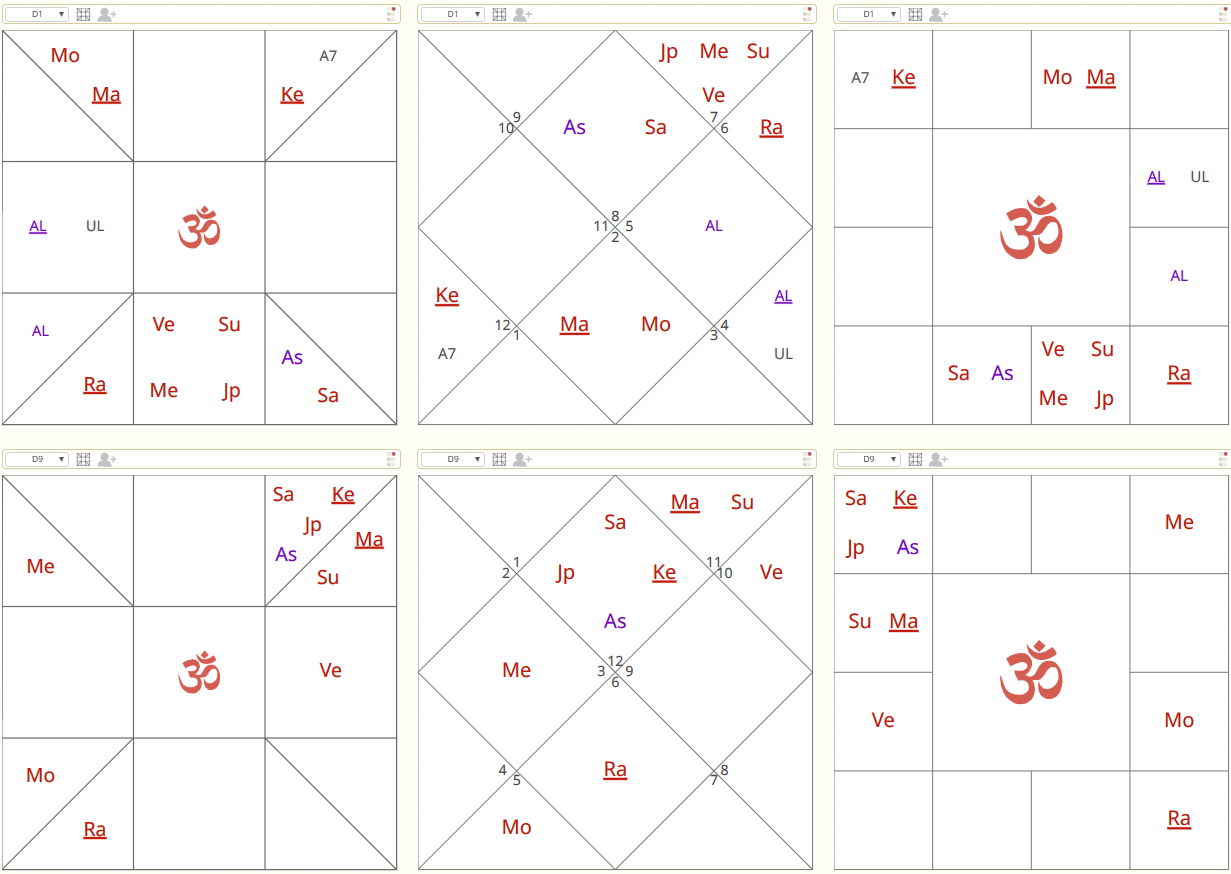
In this example, we see the Curse of Chandra (Moon) present in the seventh house. Chandra is in conjunction with Mangal (Mars) and aspected by Śani (Saturn) and Rāhu. Chandra is the ruler of the ninth house, which is of vital importance for marriage in Stri Jātaka.
Additionally, both Mangal and Śani are in Māraṇa Kāraka Sthāna. Upapada is located in the ninth house, ruled by Chandra under the curse. This indicates that the partner may have health issues, especially related to blood pressure.
The ruler of the second house from Upapada is in Māraṇa Kāraka Sthāna in the twelfth house, which is also highly unfavorable for partnerships, because it is the sixth from the seventh house and debilitated. A debilitated ruler of the second from Upapada indicates health problems for the partner.
In Navāṁśa, Sūrya (Sun) is again in Māraṇa Kāraka Sthāna, together with Mangal. Once more, this shows that there is no chance for marriage to endure. The person became widowed at age 32.
For sustaining marriage, women worship Viṣṇu Avatāras and men worship Dasa Mahāvidyā.
ॐ श्रीं लक्ष्मीनारायणभ्यम् नमः
om śrīṁ lakṣmīnārāyaṇabhyam namaḥ