Yoga Kāraka literally means “the giver of unity.” This type of yoga represents the unity between a person’s character, work, ideals, and life path (Kendra) and the prayers or spiritual practices a person performs (Koṇa).
A Graha that becomes a Yoga Kāraka is considered very favorable because of this unity and will give the person great blessings. Yoga Kāraka means the ability to give favorable results. The Lord of the Lagna is a natural Yoga Kāraka in every chart because the first Bhāva is both a Kendra and a Koṇa.
The Lords of the trines (the fifth and ninth Bhāvas) are important for wealth and its preservation, while the Lords of the fourth, seventh, and tenth Bhāvas are important for happiness. The first, tenth, seventh, and fourth Bhāvas and their Lords represent the Ayaṇas (goals of life) known as Dharma, Artha, Kama, and Mokṣa.
Mahaṛṣi Parāśara, in the Bṛhat Parāśara Horā Śāstra, devoted an entire chapter to the discussion of Yoga Kārakas, and at the beginning of that chapter he first explains the nature of house Lords in a chart.
First, he states that benefic planets, when ruling Kendras, will not give their benefic results, while malefics ruling Kendras will not remain unfavorable. The Lords of the Koṇas will give favorable results, especially the Lord of the Lagna, because it rules both a Kendra and a Koṇa. The fifth and ninth Bhāvas and their Lords are considered for wealth, while the seventh and tenth and their Lords are responsible for happiness. Any Graha ruling the third, sixth, or eleventh Bhāva will give negative effects. The effects of the Lords of the twelfth and second Bhāvas will depend on their associations. The Lord of the eighth Bhāva is not favorable because it rules the twelfth from the ninth Bhāva. If the Lord of the eighth is also the Lord of the third, seventh, or eleventh Bhāva, it will be particularly negative, while its simultaneous Lordship of a Koṇa will provide favorable effects.
Combinations among Lords from Chapter 34 of BPHS
If there is:
- Parivartana (exchange) between the Lord of a Kendra and the Lord of a Koṇa, or
- the Lord of a Kendra in conjunction with the Lord of a Koṇa, or
- the Lord of a Kendra in conjunction with the Lord of a Koṇa in a Kendra or a Koṇa, or
- the Lord of a Koṇa placed in a Kendra, or
- the Lord of a Kendra placed in a Koṇa, or
- a full Dṛṣṭi (aspect) between the Lord of a Kendra and the Lord of a Koṇa,
then a yoga occurs. A person born with such a yoga will become a king and will be famous.
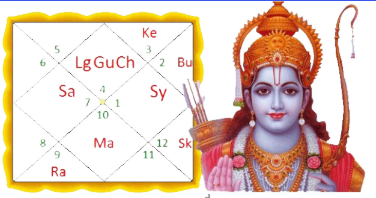
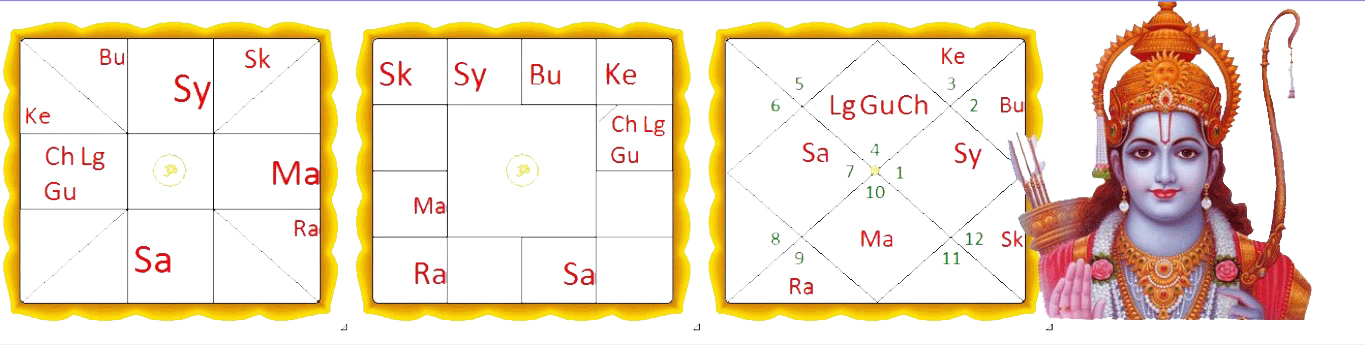
If we look at the chart of Bhagavan Śrī Rāma, we can see that many of the combinations mentioned above are present.
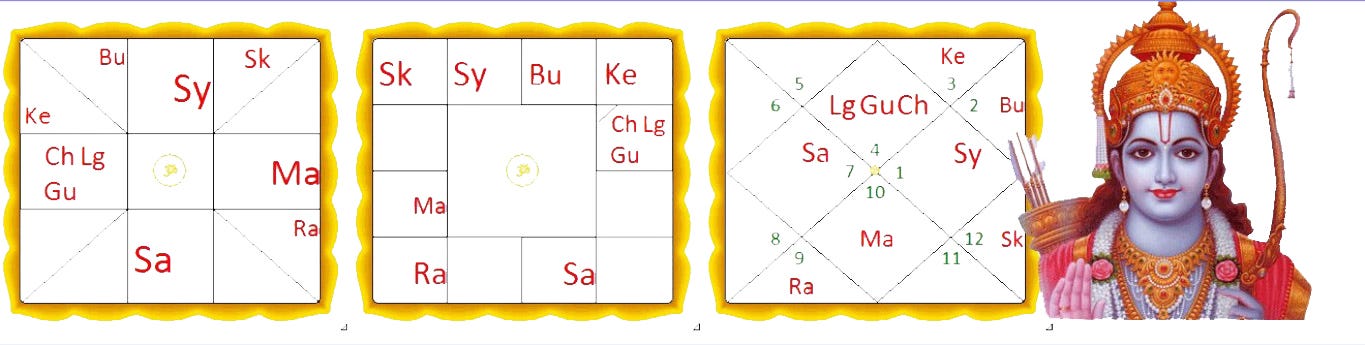
The Lord of the Lagna is the Lord of both a Kendra and a Koṇa, which is the first Yoga. After that we have Guru, who is the Lord of the ninth placed in a Kendra. Maṅgala is the Lord of the fifth Bhāva (a Koṇa) and is placed in the seventh (a Kendra). Then Śukra, as the Lord of the fourth Bhāva (a Kendra), is placed in the ninth Bhāva (a Koṇa). Therefore Chandra, Guru, Śukra, and Maṅgala are Yoga Kārakas in this chart and they will give favorable effects and support the Raja Yogas in the chart.
The Lord of the sixth Bhāva is very unfavorable, and it is said that it will destroy the Bhāva it aspects.
Meṣa Lagna
Maṅgala – Lord of the first and eighth Bhāvas. Parāśara says it will assist favorable Grahas. Here the discussion is not about its own beneficence, but about helping favorable Grahas. This is because he said that the beneficence of the Lords of the twelfth and eighth Bhāvas depends on their associations.
Śukra – Lord of the second and seventh Bhāvas (both Māraka Bhāvas), which means it will be extremely unfavorable.
Budha – Lord of the third and sixth Bhāvas. Both are Trika Bhāvas, those in which we think we are Brahma, which again indicates unfavorable results, because besides being unfavorable they are also Duṣthānas.
Chandra – Lord of the fourth Bhāva, a Kendra. Parāśara said that a benefic ruling a Kendra is not good, which means Chandra becomes unfavorable.
Sūrya – it is said that Sūrya is always favorable for Meṣa Lagna. It is the Lord of the fifth Bhāva, and Meṣa is the sign of Sūrya’s exaltation.
Guru – Lord of the ninth and twelfth. It is said to be a favorable Graha. This can be understood because of the ninth Bhāva it rules. Parāśara also notes that the conjunction of Śani and Guru is very unfavorable, which confirms the earlier point that the beneficence of the twelfth lord depends on association, in this case with Bādhakeśa, which is very negative. If Bādhakeśa is connected with Guru, it shows that the person did not serve the Guru or ate Prasad intended for the Devata.
Śani – Lord of the tenth and eleventh. As the Lord of the tenth it is favorable, but as the Lord of the eleventh it is unfavorable, especially for Meṣa Lagna, because the eleventh is also the Bādhaka Sthāna.
Vṛṣabha Lagna
Śukra is unfavorable for Vṛṣabha Lagna, ruling the Lagna and the sixth Bhāva. Parāśara noted that the Lord of the sixth behaves unfavorably in the chart.
Budha is mildly unfavorable because it rules the Māraka Bhāva (the second) and also the fifth Bhāva. Budha is also the Graha that causes the debilitation of Śukra, the Lord of Vṛṣabha.
Chandra is the Lord of the third Bhāva and therefore unfavorable.
Sūrya is the Lord of the fourth Bhāva, meaning a malefic ruling a Kendra does not necessarily remain unfavorable.
Guru is unfavorable because it rules the eighth and eleventh. Lordship of the eighth alone does not give a final conclusion regarding beneficence, because it can be modified through association, but as Lord of the eleventh it will definitely give unfavorable results.
Śani is favorable because it rules the ninth and tenth Bhāvas. A malefic ruling a Kendra and the ninth Bhāva is definitely favorable, but it should not be forgotten that it is also Bādhakeśa.
Maṅgala can bring death.
Mithuna Lagna
Budha is the Lord of the first and fourth Bhāvas, which means it will certainly be favorable for this Lagna.
Chandra is the Lord of a Māraka Bhāva, but its results will greatly depend on its associations in the chart.
Sūrya, as the Lord of the third Bhāva, is unfavorable.
Guru is the Lord of the seventh and tenth Bhāvas, and as a benefic it is not favorable. It is also Bādhakeśa.
Śani is the Lord of the eighth and ninth Bhāvas, which means its beneficence will depend on associations in the chart. Parāśara gave the example that its conjunction with Guru is similar to the case for Meṣa Lagna, where Guru is also Bādhakeśa.
Maṅgala is the Lord of the sixth and eleventh Bhāvas, which is highly unfavorable.
Śukra is the Lord of the fifth and twelfth Bhāvas, which indicates beneficence. As Lord of the twelfth Bhāva, it will also require good associations in the chart.
Karka Lagna

Chandra, as Lord of the Lagna, is favorable.
Sūrya, Lord of the second Bhāva, and its beneficence will depend on associations with other Grahas.
Guru is the Lord of the sixth and ninth Bhāvas, which would make it unfavorable because of the sixth Bhāva, but because of its exaltation in Karka, Parāśara attributes favorable results to it.
Śani, although the Lord of a Māraka and the eighth, its beneficence will depend on its associations with other Grahas.
Maṅgala is the Lord of the fifth and tenth Bhāvas and will give great beneficence because it rules a Koṇa, which gives favorability, and as a malefic ruling a Kendra it loses its malefic nature.
Śukra is the Lord of a Kendra, which is not good for a benefic, and also the Lord of the eleventh, which makes it unfavorable. It is also Bādhakeśa.
Budha is the Lord of the third and twelfth and will therefore be unfavorable.
Siṁha Lagna

Sūrya is favorable as the Lord of the Lagna.
Budha rules the second and eleventh Bhāvas, making it unfavorable.
Śukra, Lord of the third and tenth Bhāvas. As Lord of the Third, it will show unfavorable results, and as a benefic ruling the tenth it loses its beneficence. Therefore, it is unfavorable.
Maṅgala will definitely give favorable results as the Lord of both a Kendra and a Koṇa simultaneously, creating one of the combinations of Lakshmi Narayana Yoga.
Guru, Lord of the fifth and twelfth Bhāvas, will give favorable results, though some unfavorable results may occur if Guru is in a bad Sambandha.
Śani is the Lord of the sixth and seventh Bhāvas and is unfavorable, though modifications may occur due to its associations.
Chandra is the Lord of the twelfth, and its beneficence will depend on its position and associations in the chart.
Kanya Lagna

Budha, as Lord of the Lagna and the tenth Bhāva, is favorable for this Lagna.
Śukra is the Lord of the second and ninth Bhāvas, which gives beneficence, although it should not be forgotten that Śukra is also a Māraka for Kanya. The conjunction of Śukra and Budha will produce a Yoga.
Maṅgala is the Lord of the third and eighth, which makes it very unfavorable.
Guru, a benefic ruling Kendras, is unfavorable. It is also Bādhakeśa.
Śani is the Lord of the fifth and sixth Bhāvas, which indicates unfavorable results.
Chandra, Lord of the eleventh, unfavorable.
Sūrya, Lord of the twelfth, whose beneficence will depend on position and conjunctions in the chart.
Tula Lagna
Śukra, Lord of the Lagna and the eighth Bhāva, will be neutral.
Maṅgala is the Lord of the second and seventh Bhāvas, Māraka Bhāvas, and will be unfavorable.
Guru, Lord of the third and sixth Bhāvas, is very unfavorable for Tula Lagna.
Śani is the Lord of the fourth and fifth Bhāvas and therefore becomes a Yoga Kāraka, giving great beneficence.
Budha is the Lord of the ninth and twelfth and will give favorable results.
Chandra is the Lord of the tenth and its beneficence will depend on benefic influence. With Budha it gives Raja Yoga.
Sūrya, Lord of the twelfth Bhāva, will be unfavorable. Tula is the sign of Sūrya’s debilitation.
Vṛścika Lagna

Maṅgala – Lord of the first and sixth Bhāvas. Because of Lordship over the sixth it should be unfavorable, but as the Lord of the Lagna it gains a neutral status.
Guru – Lord of the second and fifth Bhāvas. Despite ruling the second Bhāva, Parāśara gives it favorable results.
Śani – Lord of the third and fourth Bhāvas. As Lord of a Trika Bhāva it is unfavorable.
Śukra – Lord of the seventh and twelfth Bhāvas. Besides ruling a Māraka Bhāva, it also rules a Duṣthāna, which will definitely result in unfavorable effects.
Budha – Lord of the eighth and eleventh Bhāvas, a Duṣthāna and Trika Bhāva, therefore unfavorable.
Chandra – Lord of the ninth Bhāva, favorable. Parāśara says it is a Yoga Kāraka.
Sūrya – Lord of the tenth Bhāva, favorable, a malefic ruling a Kendra.
Dhanuṣ Lagna

Guru – Lord of the Lagna and the fourth Bhāva. As a benefic it is not able to show its own beneficence, therefore neutral.
Śani – Lord of the second and third. Parāśara says it is a killer.
Maṅgala, Lord of the fifth and twelfth Bhāvas, favorable.
Śukra, Lord of the sixth and eleventh, therefore very unfavorable and capable of causing death.
Budha – Lord of the seventh and tenth. Its results will depend on its associations in the chart, but Parāśara says it is important in confirming Yogas.
Chandra is the Lord of the eighth Bhāva, which means its position and associations will determine its beneficence.
Sūrya is the Lord of the ninth Bhāva, which gives complete beneficence.
Makara Lagna
Śani – Lord of the first and second Bhāvas. Therefore, it will not wish to kill itself, giving a certain neutrality.
Guru – Lord of the third and twelfth Bhāvas. Unfavorable because of Lordship over Duṣthānas and a Trika Bhāva.
Maṅgala is the Lord of the eleventh and fourth Bhāvas, and since it rules a Trika Bhāva it becomes unfavorable.
Śukra is the Lord of the fifth and tenth Bhāvas. Lordship of a Kendra causes it to lose beneficence, but as Lord of the fifth it becomes a Yoga Kāraka.
Budha is the Lord of the sixth and ninth Bhāvas. According to this it would be unfavorable, but Parāśara gives it favorable results.
Chandra – Lord of the seventh Bhāva, a Māraka, unfavorable.
Sūrya, Lord of the eighth Bhāva, will depend on its position and associations in the chart, though Parāśara gives it neutral effects.
Kumbha Lagna

Śani – Lord of the twelfth and first, giving favorable results.
Guru – Lord of the second and eleventh Bhāvas, making it unfavorable because of Lordship over Trika and Māraka Bhāvas.
Maṅgala – Lord of the third and tenth Bhāvas, unfavorable.
Śukra is the Lord of the fourth and ninth Bhāvas, very favorable, a Yoga Kāraka.
Budha – Lord of the fifth and eighth Bhāvas, giving mixed results.
Chandra – Lord of the sixth Bhāva, unfavorable.
Sūrya – Māraka, unfavorable.
Mina Lagna
Guru – Lord of the first and tenth Bhāvas, favorable.
Maṅgala – Lord of the second and ninth Bhāvas.
Śukra – Lord of the third and eighth Bhāvas, unfavorable.
Budha – Lord of the fourth and seventh Bhāvas, favorable but Bādhakeśa.
Chandra – Lord of the fifth Bhāva, favorable.
Sūrya – Lord of the sixth Bhāva, unfavorable.
Śani – Lord of the eleventh and twelfth Bhāvas, unfavorable.
Based on this, it is possible to conclude whether a Graha will play a favorable or unfavorable role in a chart.
ॐ कृष्ण गुरु
om kṛṣṇa guru